 Where is the Last Royal Family in China?
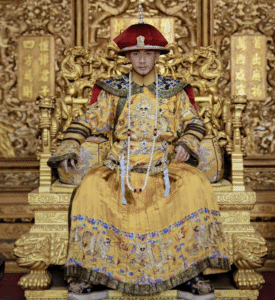 Where is the Last Royal Family in China?
Many people wondering that where is the last royal family in China? Let’s start from the story of the last emperor. The story of China’s last royal family is one of tragedy, displacement, and transformation. From the grandeur of the Forbidden City to the humble life of a common citizen, the journey of China’s final emperor, Puyi, is a remarkable tale of a world lost in time. But where is the last royal family in China today? To understand this, we must look at what happened to the last emperor in China and the royal family that surrounded him.
The 3 years old boy Puyi: The Last Emperor of China
In 1908, a three-year-old boy named Aisin Gioro Puyi ascended the throne as the last emperor of China, under the reign name of Xuantong. Puyi was the nephew of the previous emperor, Guangxu, as the latter had no Child. The Qing Dynasty, which had ruled China for nearly three centuries, was in a period of decline, facing both internal corruption and external pressures from Western imperialism.
As a child emperor, Puyi had no power or control the political events. His reign was mostly symbolic, court officials and former generation princes governing everything. This continued until 1911, when the Qing Dynasty was finally overthrown by the Xinhai Revolution, led by Sun Yat-sen and other revolutionary leaders. The royal family was replaced with a republic, not only marking the royal family ended, also over the 2,000 years of imperial rule in China.
What Happened to the Last Emperor in China?
After the fall of the Qing Dynasty, the the royal family a measure of protection by the new gorvernment. Despite the abdication, Puyi and other members of the imperial family were allowed to remain in the Forbidden City, the palace still under the protection of the new government. However, they no longer held any political power. Puyi was forced to leave the Forbidden City untill1924, after a coup led by the warlord Zhang Zuolin ousted him.
With nowhere to go, the last emperor fled with his family and entourage, first staying in a temporary residence and later moving to the city of Tianjin, near Beijing. The foreign concessions in Tianjin, became a haven for foreigners, nobles and Puyi found refuge in the Japanese-controlled section of the city. This marked the beginning of Puyi’s complex relationship with Japan, which would eventually lead to his re-installation as emperor of the puppet state of Manchu.
From exile Emperor to Puppet emperor: Puyi’s Role in state of Manchu
In 1931, after Japan invaded Manchuria, Puyi disguide himself as a Japanese murchant went to the northeast of China, Arranged by Japanese, this was a enthrone ceremony held there in 1934, where he was manipulated into becoming the figurehead ruler of the puppet emperor for state of Manchu. This state was controlled by Japan, and Puyi’s role was largely ceremonial, with little actual power. His rule was essentially one of subjugation, serving the interests of Japanese imperialism.
Puyi’s time as the emperor of Manchukuo was short-lived. After Japan’s defeat in 1945, Puyi was captured by the Soviet Red Army and taken to Soviet. In 1950, he was handed over to the newly established People’s Republic of China. Puyi was sent to a “re-education” camp, where he was forced to learn basic labor skills, such as washing clothes, cooking, and cleaning. These were tasks he had never learned as an emperor, although is was easy job for common people.
Puyi’s Later Years: A Humble Life
Despite the bad treatment in the re-education camp, Puyi’s life began to change in the 1950s. In December 1959, he was released from the camp after demonstrating good behavior. He was given a job at the Beijing Botanical Garden, where he lived as a common citizen for the first time in his life. In 1962, Puyi married a nurse, and for the first time, he experienced the simple pleasures of life as a regular person.
Sadly, Puyi’s life was cut short when he died of kidney cancer in 1967 at the age of 61. He never had children, and his death marked the end of the direct line of the Qing Dynasty. Interestingly, the last three emperors of the Qing Dynasty, including Puyi, had no heirs, and the royal family slowly faded from prominence.
The street talk of the Last Royal Family in China
While Puyi’s death marked the end of the Qing Dynasty’s direct lineage, some distant relatives of the royal family survived, though they no longer held the same status or privileges. Many of the surviving royal family members changed their Manchu surnames to local Chinese surnames to assimilate into the society they had once ruled, also for safety in the chaos. So, in the recent years, various people have claimed to be descendants of the Qing emperors, but such claims are often difficult to verify, and they are not really care about this.
In today’s open society, these claims are more of a topic of conversation than a source of power or prestige. Despite the end of imperial rule in China, the stories of the last royal family continue to captivate the imaginations of people both in China and abroad. Their history is a testament to the enduring legacy of the Qing Dynasty and the transformation of China into the modern state it is today.
Conclusion: Where is the Last Royal Family in China?
Today, the descendants of the Qing Dynasty’s royal family no longer hold the power or influence they once did. The last emperor, Puyi, is gone, and with him, the imperial family as a political entity disappeared. However, the stories and legends surrounding the last royal family in China continue to persist, but we can not find any offical record to know this.