Is the Great Wall China’s Border Today?
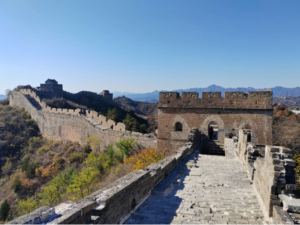 Many visitors are curious to this, but the answer is simple:
No, the Great Wall is not China’s border today.
In fact, even in ancient times, the Great Wall was never a clear national border in the modern sense.
The Great Wall Is Entirely Inside China Today
Today, the entire Great Wall lies well within China’s borders.
If you travel north from the Great Wall by car, it usually takes 7 to 8 hours to reach the nearest international border with Mongolia. The wall itself does not mark the edge of the country.
Modern borders are defined by international agreements, not by ancient fortifications.
Ancient China Had No Fixed Borders
In ancient times, the idea of a fixed national border did not exist, it could be further or closer with the militatary power up or down.
The Great Wall functioned more as a defensive zone, not a strict dividing line. During peaceful periods, the wall area was often a place of contact rather than separation.
Trade, negotiation, and cultural exchange happened along and across the wall.
Trade Along the Great Wall
For centuries, nomadic groups from the northern grasslands—such as Mongols and other steppe peoples—regularly traded with the agricultural societies of central China.
They exchanged:
- Animal skins and furs
- Livestock and dairy products
- In return, they sought:
- Silk and porcelain
- Everyday goods
- Tea, which was especially important. Nomadic diets relied heavily on meat and dairy, and tea played a key role in digestion and health. This made tea one of the most valuable trade items along the Great Wall.
Why Some Goods Were Restricted
Not everything was freely traded.
Metal tools were often tightly controlled by fudal dynasty rulers. Rulers feared that iron tools could be turned into weapons and used against them.
In this way, the Great Wall acted not only as a military barrier, but also as a control point for trade and security—much like how modern countries regulate sensitive technologies today.
Mongolia Then and Now
Historically, the term “Mongolia” covered a much larger region.
Today, that area is divided into:
Inner Mongolia, which is part of China
Mongolia, an independent country established in the middle 20th century
Because of this historical shift, the Great Wall never marked a permanent or universal boundary between China and “Mongolia,” either in the past or in the present.
A Zone, Not a Line
So from ancient times to today, the Great Wall was never a clear national border.
It was a complex system:
- A military defense
- A trade checkpoint
- A political buffer zone
Understanding this makes the Great Wall far more interesting than the simple idea of a wall dividing two worlds.