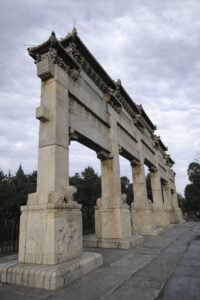
The Hidden Giant: Discovering the Ming Tombs Stone Archway
When you drive with me toward the Ming Dynasty imperial tombs, do not only watch for official signs. Instead, keep your eyes on the fruit orchards along the old road. There, a silent giant stands tall among the persimmon and apple trees. This is the Ming Tombs Stone Archway.
A Masterpiece Hidden in a Quiet Orchard
Workers built this colossal structure in 1540. Therefore, it has stood for nearly 500 years. While most tour buses pass by on the highway, I prefer the quieter route. Consequently, my guests see this masterpiece in its natural, rustic setting. It feels surreal to see such imperial grandeur towering over a simple farmer’s field.
Why This Archway Defines Ming Dynasty Architecture
As the first structure of the UNESCO-listed Ming Tombs, this gate sets a tone of immense power. Below are a few reasons why history lovers must see it:
Incredible Scale and Grandeur
The archway features a “six-pillar, five-bay” structure with eleven roofs. It stands 16 meters high and 35 meters wide. This makes it a truly massive landmark.
Masterful Carvings and Structures
The design of the archway mimics traditional Chinese wooden architecture. For instance, each of its eleven roofs features the prestigious “Wudian” style (hip roof). Artisans carved every detail from solid stone, including the delicate roof tiles, dripping eaves, and guardian beasts. They even replicated the complex “Dougong” (bracket sets) used in royal palaces.
Detailed Decorative Patterns
Furthermore, the base stones feature incredible relief carvings on all four sides. You can see mythical creatures like Kirin, lions, and dragons. Specifically, the patterns include “Lions Playing with a Silk Ball” and various dragon motifs, such as “Cloud Dragons” and “Grass Dragons.” These intricate details demonstrate the high status of the Ming imperial family.
Unmatched Imperial Status
Experts recognize this as the earliest large-scale stone memorial archway in China. Moreover, it holds the highest architectural rank among remaining ancient gates.
A Sacred Threshold of Absolute Respect
During the Ming Dynasty, this archway served as a spiritual boundary. Even high-ranking officials had to follow strict rules here. For example, they had to dismount from their horses or leave their sedans. They did this to show reverence for the ancestors before entering the sacred spirit way.
Expert Tips for Your Photography Visit
Because the gate sits far from the main tombs, very few tourists stop here. Therefore, it is the perfect spot for photos without any crowds. If you look from a drone’s perspective, you can see the perfect alignment. The gate aligns with the Great Palace Gate and Tianshou Mountain. This layout proves the mastery of ancient Feng Shui.