The Ancient Wisdom of Huabiao: Secrets of Tiananmen’s Marble Pillars
When you exit the underground walkway at Tiananmen Square, two towering white marble pillars will immediately catch your eye. These are known as Huabiao. While they stand near the grand gate, their purpose goes far beyond simple decoration.
A Guide’s Secret: Why Everyone Takes Photos Here
If you see large groups gathered here, there is a practical reason for it. Specifically, this area hosts one of the few public restrooms near the square. Consequently, tourists often take photos with these magnificent pillars while waiting for their group members.
However, these marble columns are much more than just a convenient meeting point. Many visitors search for the “granite pillars tomb near the Gate of Heavenly Peace”. In reality, these are the Huabiao, and their history is deeper than most people realize.
From “Defamation Wood” to Imperial Stone
The history of these pillars dates back thousands of years. Originally, they were simple wooden posts called “Fei Bang Mu” (Defamation Wood). Ancient kings placed them outside palaces so citizens could write grievances or suggestions.
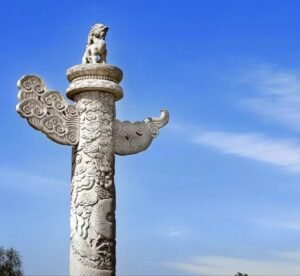
Over time, these posts evolved into the ornate stone pillars you see today. Standing nearly 10 meters tall, each pillar is carved from a single block of white marble. Although many tourists mistake them for granite, they represent the peak of imperial stone craftsmanship.
Symbolism in Stone: The “Wang Tian Hou”
At the top of each pillar sits a mythical creature called “Wang Tian Hou”. This creature is one of the nine sons of the dragon. Because of its watchful nature, it reminded the Emperor to stay connected to his people.
Facing Outward: A Reminder to Return
The pair in front of the gate faces south, watching the Emperor as he travels. Their silent message is simple: “Do not stay away too long. Return quickly to manage the empire’s affairs.”
Facing Inward: A Call to Action
Furthermore, you will find another pair inside the gate facing north. These pillars remind the Emperor not to indulge in palace luxury. Instead, they urge him to go out and see how the common people are living.
A Local Guide’s Perspective
As a guide for 20 years, I believe these pillars symbolize the balance of power and responsibility. You might be capturing a quick photo or studying the intricate dragons. Regardless, remember that these stone structures were once the vital voice of the people.
If you are looking for the iconic “granite pillars” near the gate, you will find the marble pillars right after the underground walkway. They are the perfect place to start your journey into Beijing’s history.