 Ming Dynasty Tomb Granite Pillars: What Visitors Are Really Looking For
 Ming Dynasty Tomb Granite Pillars: What Visitors Are Really Looking For
Many travelers and history enthusiasts search online for “Ming dynasty tomb granite pillars gate of heavenly peace.” this is Sacred Stele at Dingling rather than gate of heavenly peace, some people search for granite pillar at gate of heavenly peace, would be Another Pillar.
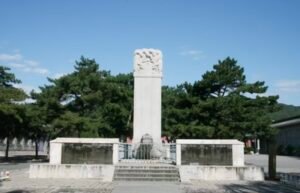
At first glance, this phrase sounds confusing. However, it often refers to a large stone monument standing in front of Ming Dynasty imperial tombs, especially at Dingling Tomb, one of the most visited sites among the Ming Tombs near Beijing.
In reality, what people are looking for is not a “gate,” but a sacred stone stele with deep historical and symbolic meaning, and begining of this tomb.
Many visitors and online sources refer to these structures as “granite pillars.”
In reality, most of the ceremonial stone elements at the Ming Tombs were carved from marble.
The Shengong Shengde Stele at Dingling Tomb
In front of Dingling Tomb once stood a monumental stone tablet known as the Shengong Shengde Stele (神功圣德碑), meaning “Stele of Sacred Merit and Virtue.” It just stands besides the tickets office.
During the Ming Dynasty, every imperial tomb featured such a stele, usually positioned in front of the main hall of the mausoleum.
Although most main halls were destroyed over time, their original locations can still be identified today by remaining stone platforms and stair foundations.
From Nanjing to Beijing: The Tradition of Ming Tomb Steles
The tradition of erecting a Shengong Shengde Stele began with Ming Taizu Zhu Yuanzhang at Xiaoling Tomb in Nanjing.
From that point onward, Ming imperial tombs followed a unified system:
A spirit way (Sacred Way)
A stele pavilion
A monumental stone tablet honoring the emperor’s achievements
Originally, these steles were housed inside stele pavilions with double-eaved hip-and-gable roofs, and arched doors on all four sides.
Was the Stele Made of Granite or Marble?
Many English sources casually describe the Dingling stele as granite or marble, but this is not accurate.
The stone is actually a type of bluestone commonly used in imperial Ming monuments, chosen for its durability and symbolic dignity.
This misunderstanding is one reason why the phrase “ming dynasty tomb granite pillars” appears so frequently in searches.
Destruction and Restoration of the Stele Pavilion
The original stele pavilion at Dingling was destroyed in the early Qing Dynasty.
During the reign of Emperor Qianlong, the site was restored, but the pavilion itself was not rebuilt.
Instead, a surrounding low wall was constructed to protect the stone stele, leaving it exposed to the open sky as seen today.
Dragon Carvings, Bixi, and Imperial Symbolism
The Dingling stele stands on a stone turtle base, known as Bixi (赑屃) or Baxia in ancient texts.
According to tradition, Bixi is one of the Nine Sons of the Dragon, famous for its strength and love of bearing heavy weight. That is why it carries imperial steles.
The stele head is carved with six high-relief coiling dragons, their heads lowered and bodies intertwined.
These dragons are sometimes described as Chi dragons (螭), while other records identify them as Bixi-related dragon forms, both symbols of imperial authority and eternal legacy.
Why This Monument Is Often Confused with the “Gate of Heavenly Peace”
The phrase “gate of heavenly peace” likely comes from visual confusion.
Large stone monuments, dragon carvings, and ceremonial placement can remind visitors of grand imperial gates such as Tiananmen.
However, the Dingling stele is not a gate, but a spiritual monument honoring the emperor’s reign and virtue.
Understanding What You’re Really Seeing at Ming Dynasty Tombs
So when people search for “ming dynasty tomb granite pillars gate of heavenly peace,” they are usually seeking to understand this powerful stone stele, its material, symbolism, and role in Ming imperial burial culture.
By recognizing the Shengong Shengde Stele for what it truly is, visitors gain a deeper appreciation of the ritual, architecture, and political philosophy behind the Ming Dynasty tomb system.